
+
JMJ
Chris Ferrara has outlined how the clarification of Bishop Schneider does not support CMTV's perspective of the canonical situation of the SSPX.
P^3
Courtesy of the Remnant
SSPX.org link with additional reference.
Voris Obtains “Clarification” from Bishop Schneider which Confirms SSPX not in “Schism”
Written by Christopher A. Ferrara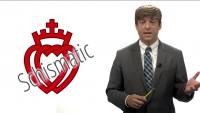
Michael Voris and CMTV have repeatedly been embarrassed by Voris’s video denunciations of egregious episcopal misdeeds, such as washing the feet of women on Maundy Thursday, which are then committed by Francis. This development has left Voris literally speechless because he adheres to the neo-Catholic principle of papal positivism: whatever the Pope says or does is immune from criticism simply because it is a Pope who has said or done it. The result is that the rational grounds for Voris’s endless bishop-bashing are effectively self-negated, rendering his entire critique of the “Church of Nice” gratuitous and rhetorically dishonest.
Now Voris faces an inverse problem: his prior praise of a courageous bishop, Athanasius Schneider, has come back to haunt him after the good Bishop, following a Vatican-ordered visitation of the two seminaries of the Society of Saint Pius X, has clearly exonerated them of the baseless charge of “schism,” recommending during an interview published in English translation by rorate-caeli.blogspot.com that the SSPX be “accepted as they are” for purposes of canonical regularization, as to which “no weighty reasons” stand in the way.
Clearly desperate, Voris obtained from Bishop Schneider an emailed “clarification” in which His Excellency essentially reaffirms the same embarrassing—for Voris—position. The full text of the “clarification” is found here, but the key points from the good Bishop’s email are as follows, quoted verbatim with my emphasis added:
Clearly desperate, Voris obtained from Bishop Schneider an emailed “clarification” in which His Excellency essentially reaffirms the same embarrassing—for Voris—position. The full text of the “clarification” is found here, but the key points from the good Bishop’s email are as follows, quoted verbatim with my emphasis added:
· I have not said that there are no reasons which would hinder a canonical recognition of the SSPX, but I said more cautiously “To my knowledge there are no weighty reasons.”
· I said that the SSPX should be received as they are, meanwhile.
· there is on both sides, i.e. the Holy See and the SPPX an over-evaluation and overestimation of Vatican II... [which is not] a Council isolated from all the previous Councils or a kind of super-Council.
· the good forces in the Church [i.e., including SSPX] which want to restore the true faith and Divine worship often fight one against the other...”
· ... SSPX makes some theological criticism of some not strictly dogmatic affirmations in the texts of Vatican II and of some postconciliar documents, which have to be taken seriously.
· … some theological objections of the SSPX can be a constructive contribution for a more mature theological explication of certain themes, as for example the collegiality, religious liberty, the liturgical reform…
· Each true catholic should only be glad and thank God, when the SSPX with all their priests and Catholic families, from which the majority are faithful Catholics, would be recognized by the Holy See, so that there would be a new considerable force for a renewal of the Church...
· The current situation of the Church is similar to that of the Arian Crisis in the 4th century...little ships of several true Catholic groups [including SSPX] attacks [sic] one another, instead of make a common defense against the enemies.
In sum, the “clarification” changes absolutely nothing of what Bishop Schneider said in praise of SSPX in the original interview:
The Holy See asked me to visit the two [seminaries] of the SSPX…I could observe a sound theological, spiritual and human reality in the two [seminaries]. The “sentire cum ecclesia” of the SSPX is shown by the fact that I was received as an envoy of the Holy See with true respect and with cordiality. Furthermore, I was glad to see in both places in the entrance area a photo of Pope Francis, the reigning Pontiff. In the sacristies there were plates with the name of Pope Francis and the local diocesan bishop. I was moved to assist the traditional chant for the Pope.(“Oremus pro pontifice nostro Francisco…”)… during the solemn exposition of the Blessed Sacrament.
I think the issue of Vatican II should not be taken as the “conditio sine qua non”, since it was an assembly with primarily pastoral aims and characteristics. A part of the conciliar statements reflects only its time and possesses a temporary value, as disciplinary and pastoral documents do….
When the SSPX believes, worship and conducts a moral [life] as it was demanded and recognized by the Supreme Magisterium… and recognizes also the validity of the sacraments according to the editio typica of the new liturgical books, this should suffice for a canonical recognition of the SSPX on behalf of the Holy See.
Otherwise the often repeated pastoral and ecumenical openness in the Church of our days will manifestly lose its credibility and the history will one day reproach to the ecclesiastical authorities of our days that they have “laid on the brothers greater burden than required” (cf. Acts 15:28), which is contrary to the pastoral method of the Apostles.
Faced with a “clarification” of no use to him in his relentless campaign to persuade his followers that SSPX is “schismatic,” Voris resorts to blatantly false characterizations of the Bishop’s email, inventing affirmations the Bishop never made. Writes Voris (emphasis mine)
· “The issue with SSPX sympathizers who support schism and their attempts to portray Bp. Schnieder as supportive of their cause is that it would place His Excellency at odds with Rome itself and with the Magisterium — a claim he totally rejects.
Bishop Schneider said nothing of schism and did not “totally reject” the claim that he “supports schism” because he does not think there is any schism in the first place. Voris knows this quite well, but here he attempts to hide the truth.
· “He [Bishop Schneider] admits, as do many Catholics not supportive of schism, that there are serious problems in the Church...”
Here Voris deviously and deceptively contrasts Bishop Schneider with Catholics “supportive of schism”—meaning the SSPX—when, as he knows full well, Bishop Schneider himself is supportive of SSPX, sees no schism, and recommends that SSPX be regularized without further ado. Unable to enlist the Bishop in support of his “schism” charge, however, Voris tries to slip it into the Bishop’s “clarification” by means of a shifty innuendo.
· “For SSPX supporters to portray Bishop Schneider as an unquestioning ally is something to which His Excellency objects.”
The Bishop did not “object” to the claim that he is an “unquestioning ally” of SSPX, because no such claim is made. Voris invented the claim and the Bishop’s “objection” in order to spin the—for Voris—useless “clarification” as support for his thoroughly discredited accusation of “schism.”
Sorry, Mr. Voris, but this is one duck that won’t lift from the lake. If there was anything left of CMTV’s credibility, it has vanished with this evidence of Voris’s determination to continue his petty vendetta against SSPX, which, as Bishop Schneider actuallysaid, exhibits “a sound theological, spiritual and human reality” and the “sentire cum ecclesia” and that “this should suffice for a canonical recognition of the SSPX on behalf of the Holy See.”
Say goodnight, Mr. Voris. No one but the dwindling number of the people you can still fool takes you seriously any longer.
Sorry, Mr. Voris, but this is one duck that won’t lift from the lake. If there was anything left of CMTV’s credibility, it has vanished with this evidence of Voris’s determination to continue his petty vendetta against SSPX, which, as Bishop Schneider actuallysaid, exhibits “a sound theological, spiritual and human reality” and the “sentire cum ecclesia” and that “this should suffice for a canonical recognition of the SSPX on behalf of the Holy See.”
Say goodnight, Mr. Voris. No one but the dwindling number of the people you can still fool takes you seriously any longer.
Comments
Post a Comment