
+
JMJ
Introduction
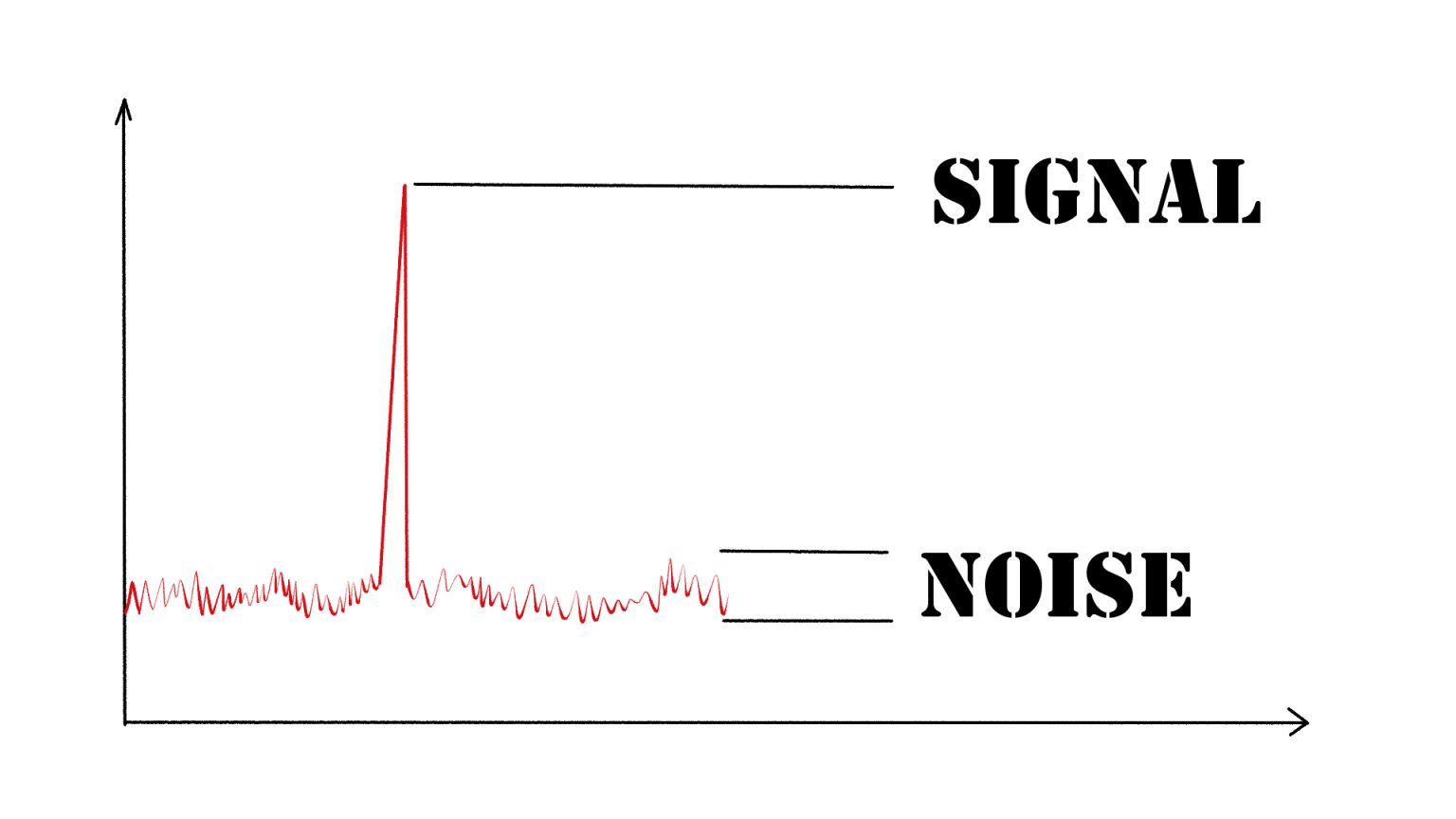
There's a lot of noise about the SSPX and the impending Episcopal Consecrations of four auxiliary bishops. Actually, most of the noise is from the media and neither principal parties (Rome / SSPX).
At this point is is important to reduce the noise in order to see the signal.
The Heart of the Matter
From my point of view there are four key issues:
Consecration without Papal Mandate
It is abundantly clear, that while the SSPX has asked from a mandate, one has not been and is unlikely to be given. Thus we have a repeat of 1988, which Rome asking for 'talks' and delaying any real action - as well as trying to delay the consecrations.
This action has been covered in Canon Law since 1950 (now Canons 1013, 1387), at least that's when the penalty was increase from suspension to excommunication by Pope Pius XII. This was done when the Chinese Catholic Patriotic Association started to consecration bishops for its parallel Church. This is a real schism by a country that does or didn't not recognize offer submission to the Roman Pontiff.
In both cases, the SSPX is carrying out consecrations not just without but explicitly opposed to the will of the reigning Pontiff.
Obedience
That bring us to an important point. This act is an act of disobedience covered by a canon that has nothing to do with the Unity of the Church - i.e. Schism.
In order for an act of disobedience to take on a schismatic nature, something more needs to be added. That something more is something that the SSPX left out in 1988 and will be leaving out in 2026. They will not setup a separate Church structure, the bishops will be auxiliary bishops with no jurisdiction.
Schism
The accusation or thought that a consecration without mandate constitutes a schsismatic act is a result of an after the fact decision by Pope St. John Paul II and described in his letter Ecclesia Dei (link). The 1988 canonical warning (link) did not cite the canons of schism, likewise neither did the letter of 2026. The canon of consecration without Pontifical Mandate continue to resign in the section on "OFFENCES AGAINST THE SACRAMENTS" and not those dealing with schism in the section on "OFFENCES AGAINST THE FAITH AND THE UNITY OF THE CHURCH" but in the section of .
So following the original reasoning of Cardinal Lara (link) in the 1980's, consistent with the 1988 canonical warning, consecrating bishop sans mandate is not in and of itself a schismatic act.
No schismatic act, no schism.
Hence the reason why Rome later admitted under Benedict XVI that it wasn't really a schism.
Ipso Facto Excommunications
Arguments have been made that the automatic excommunications of the bishops involved in the consecration are not effective due to the reasons provided in canon law for a lessoning or even nullifying of canonical penalties. Similar arguments are being made even today (link).
When I asked about the situation of the SSPX ... all I got was 'not full communion'(link). If the SSPX wasn't in schism in 2014, how would it be in schism after an equivalent act in 2026?
Conclusion
Just someone disagrees with you doesn't mean they disrespect you!!! In the same way, just because someone disobeys the Pope doesn't mean that they don't 'submit' to the Office that they hold. They are disobeying a specific order that needs to be assessed in the objective light of the law and subjective light of the sentiments of the one(s) disobeying the order.
P^3
P.S. What follows are other thoughts and scribbling as I was thinking about this article.
Some Key Elements
- SSPX repeat of 1988 consecrations
- Consecration without Papal Mandate:
- Can. 1013 No bishop is permitted to consecrate anyone a bishop unless it is first evident that there is a pontifical mandate.
- Can. 1014 Unless the Apostolic See has granted a dispensation, the principal bishop consecrator in an episcopal consecration is to be joined by at least two consecrating bishops; it is especially appropriate, however, that all the bishops present consecrate the elect together with the bishops mentioned.
- Can. 1387— Both the Bishop who, without a pontifical mandate, consecrates a person a Bishop, and the one who receives the consecration from him, incur a latae sententiae excommunication reserved to the Apostolic See.
- Disobedience to a direct order from the Pope
- Can. 1371 — § 1. A person who does not obey the lawful command or prohibition of the Apostolic See or the Ordinary or Superior and, after being warned, persists in disobedience, is to be punished, according to the gravity of the case, with a censure or deprivation of office or with other penalties mentioned in can. 1336, §§ 2-4.
- Can. 1336— § 1. Expiatory penalties can affect the offender either for ever or for a determined or an indeterminate period. Apart from others which the law may perhaps establish, they are those enumerated in [an order, prohibition, deprivation, or dismissal from the clerical state].
- Pope et al repeat of 1988 response
- Statement of His Eminence Cardinal Víctor Manuel Fernández, Prefect of the Dicastery for the Doctrine of the Faith, 13.05.2026
- With regard to the Priestly Fraternity of Saint Pius X, we reiterate what has already been communicated. The episcopal ordinations announced by the Priestly Fraternity of Saint Pius X do not have the requisite papal mandate.
- This act will constitute “a schismatic act” (John Paul II, Ecclesia Dei, no. 3) and “formal adherence to the schism constitutes a grave offence against God and entails the excommunication established under Church law” (ibid., 5c; cf. Pontifical Council for Legislative Texts, Explanatory Note, 24 August 1996).
- The Holy Father continues in his prayers to ask the Holy Spirit to enlighten those responsible for the Priestly Fraternity of Saint Pius X so that they may reconsider the extremely grave decision they have taken.From the Vatican, 13 May 2026
- Ipso facto excommunication (see Canon 1387 above)
- Can. 751
- Heresy is the obstinate denial or obstinate doubt after the reception of baptism of some truth which is to be believed by divine and Catholic faith; apostasy is the total repudiation of the Christian faith;
- schism is the refusal of submission to the Supreme Pontiff or of communion with the members of the Church subject to him.
- Can. 1364
- An apostate from the faith, a heretic or a schismatic incurs a latae sententiae excommunication,
- without prejudice to the provision of can. 194 § 1 n.
- 2; he or she may also be punished with the penalties mentioned in can. 1336 §§ 2-4.
- Creation of a new Ecclesia Dei Commission? ( Diana Montagna's Substack: Cardinal Muller ... We must respond to the SSPX)
- Potential Impacts
- Retraction of jurisdiction for confessions and wedding provided by Pope Francis.
- Persecution of Traditional Catholics
Ramp up to the Consecrations
In essence the SSPX is repeating the 1988 consecrations by consecrating only four bishops. I personally felt they should consecrate at least six or seven. Looking at the broader context, it makes sense that they are acting in accord with what Archbishop Lefebvre saw as necessary to ensure the survival of the SSPX to continue to provide the sacraments to the faithful.
They have also repeated the approach of their founder by seeking audiences for at least a year in advance before making definitive plans and, I understand when met with silence, a public announcement that resulted in a letter from the Prefect of the DDF (above)
There has been very little tangible information from the Vatican after the official note reproduced above. They seem content to let the media speak from them.
The SSPX has not been silent.
Confronted with the assertion that acceptance of the Second Vatican Council is required for full communion (see end of article), they have responded with not one by two Declarations of Faith, the second of which spans 28 pages and could be called a listing of Dogmas opposed to Modern Catholicism as practiced. (FSSPX.news (May 14, 2026): Declaration of Catholic Faith addressed to Pope Leo XIV, FSSPX.news (June 24, 2026): Profession of Catholic Faith of the Society of Saint Pius X to Enlighten Souls in the Face of Modern Errors )
Press Release
https://x.com/dianemontagna/status/2021923381344350699?s=20
STATEMENT OF THE DICASTERY FOR THE DOCTRINE OF THE FAITH
Regarding the Meeting between the Prefect of the Dicastery for the Doctrine of the Faith and the Superior General of the FSSPX
On 12 February 2026, a cordial and sincere meeting took place at the Dicastery for the Doctrine of the Faith between the Prefect, His Eminence Cardinal Victor Manuel FERNANDEZ, and the Superior General of the FSSPX, Reverend Don Davide PAGLIARANI, with the approval of the Holy Father Leo XIV.
After clarifying certain points presented by the FSSPX in various letters, particularly those sent between 2017 and 2019 — including, among other topics, the question of the divine will concerning the plurality of religions — the Prefect proposed a pathway of specifically theological dialogue, following a precise methodology, on issues that have not yet received sufficient clarification. These include: the distinction between an act of faith and the “religious submission of mind and will,” as well as the differing degrees of adherence required by various texts of the Second Vatican Ecumenical Council and their interpretation. At the same time, he proposed addressing a series of topics listed by the FSSPX in its letter of 17 January 2019.
The aim of this dialogue is to highlight, in the topics under discussion, the minimum requirements for full communion with the Catholic Church, and consequently to outline a canonical statute for the Fraternity, along with other aspects requiring further study.
The Holy See reaffirmed that the ordination of bishops without the mandate of the Supreme Pontiff, who possesses ordinary, supreme, universal, immediate, and direct power (cf. CIC, can. 331; Dogmatic Constitution Pastor aeternus, chs. I and III), would constitute a decisive rupture of ecclesial communion (schism), with serious consequences for the Fraternity as a whole (John Paul II, Apostolic Letter Ecclesia Dei, 2 July 1988, nn. 3 and ff.; Pontifical Council for Legislative Texts, Explanatory Note, 24 August 1996, n. 1).
Therefore, the possibility of undertaking this dialogue presupposes that the Fraternity suspend the announced episcopal ordinations.
The Superior General of the FSSPX will present the proposal to his Council and will provide his response to the Dicastery for the Doctrine of the Faith.
In the event of a positive response, the steps, stages, and procedures to be followed will be established by mutual agreement.
The Church is asked to accompany this process, especially in the coming times, with prayer to the Holy Spirit, who is the principal agent of true ecclesial communion willed by Christ.
SSPX Response
Letter from Father Pagliarani to Cardinal Fernández
- We both know in advance that we cannot agree doctrinally, particularly regarding the fundamental orientations adopted since the Second Vatican Council. This disagreement, for the Society’s part, does not stem from a mere difference of opinion, but from a genuine case of conscience, arising from what has proven to be a rupture with the Tradition of the Church. This complex knot has unfortunately become even more inextricable with the doctrinal and pastoral developments of recent pontificates. I therefore do not see how a joint process of dialogue could end in determining together what would constitute “the minimum requirements for full communion with the Catholic Church”, since—as you yourself have recalled with frankness—the texts of the Council cannot be corrected, nor can the legitimacy of the liturgical reform be challenged.
- This dialogue is supposed to clarify the interpretation of the Second Vatican Council. But this interpretation is already clearly given in the post-Conciliar period and in the successive documents of the Holy See. The Second Vatican Council is not a set of texts open to free interpretation: It has been received, developed, and applied for sixty years by successive popes, according to precise doctrinal and pastoral orientations. This official reading is expressed, for example, in major texts such as Redemptor hominis, Ut unum sint, Evangelii gaudium, or Amoris lætitia. It is also evident in the liturgical reform, understood in the light of the principles reaffirmed in Traditionis custodes. All these documents show that the doctrinal and pastoral framework within which the Holy See intends to situate any discussion has already been firmly established.
- One cannot ignore the context of the dialogue proposed today. We have been waiting for seven years for a favourable response to the proposal of doctrinal discussion made in 2019. More recently, we have written twice to the Holy Father: first to request an audience, then to clearly and respectfully explain our needs and the real-life situation of the Society. Yet, after a long silence, it is only when episcopal consecrations are mentioned that an offer to resume dialogue is made, which thus seems dilatory and conditional. Indeed, the hand extended to open the dialogue is unfortunately accompanied by another hand already poised to impose sanctions. There is talk of breaking communion, of schism,2 and of “serious consequences”. Moreover, this threat is now public, creating pressure that is hardly compatible with a genuine desire for fraternal exchanges and constructive dialogue.
- Furthermore, to us it does not seem possible to enter into a dialogue to define what the minimum requirements for ecclesial communion might be, simply because this task does not belong to us. Throughout the centuries, the criteria for belonging to the Church have been established and defined by the Magisterium. What must be believed in order to be Catholic has always been taught with authority, in constant fidelity to Tradition.Thus, we do not see how these criteria could be the subject of joint discernment through dialogue, nor how they could be re-evaluated today so as not to correspond to what the Tradition of the Church has always taught—and which we desire to observe faithfully in our place.
- Finally, if a dialogue is envisaged with the aim of producing a doctrinal statement that the Society could accept regarding the Second Vatican Council, we cannot ignore the historical precedents of efforts made in this direction. I draw your attention to the most recent: the Holy See and the Society had a long course of dialogue, beginning in 2009, particularly intense for two years, then pursued more sporadically until 6 June 2017. Throughout these years, we sought to achieve what the Dicastery now proposes. Yet, everything ultimately ended in a drastic manner, with the unilateral decision of Cardinal Müller, the Prefect of the Congregation for the Doctrine of the Faith, who, in June 2017, solemnly established, in his own way, “the minimum requirements for full communion with the Catholic Church”, explicitly including the entire Council and the post-Conciliar period.3 This shows that, if one persists in a doctrinal dialogue that is too forced and lacks sufficient serenity, in the long term, instead of achieving a satisfactory result, one only worsens the situation.
Comments
Post a Comment